Why You Shouldn’t Buy Telstra Shares – Ever!

by Kris Sayce on 12 February 2010

There comes a time when investors just need to let go.

Some things are just not meant to be.

Yet even so, the fascination with and the desire for some investors to buy Telstra [ASX: TLS] shares is unwavering.

Personally we don’t get it. If Telstra was the only share listed on the Australian Stock Exchange, we still wouldn’t touch it. In fact, I think I’d rather buy an over-priced property with a 100% mortgage and negative gearing than buy Telstra shares.

That’s how bad an investment in Telstra is.

Given where the share price is, we’d say that most investors agree:

TLS Weekly

But amazingly, there’s still a bunch of investors out there who keep lapping it up. They keep believe it can’t possibly get any cheaper.

Remember the scam last year with the sale of Telstra shares by the Future Fund? The fund managers and brokers were falling over themselves to grab a piece of the action.

So excited were they, that as we recall, the Future Fund ended up flogging more shares to meet the demand.

Yet still the share price has done nothing. And odds are it never will do anything.

But that doesn’t stop the brokers from trying to hoodwink their clients into the stock. Look at the chart below that we got from the CMC Markets Stockbroking website:

CMC Markets Stockbroking

Source: CMC Markets Stockbroking

Of the five analysts surveyed – which granted, isn’t many – all five of them reckon Telstra is a cracking buy right now.

Then there’s the broker consensus on the Investsmart website. Seven buys and three holds. The analysts obviously reckon they’ve picked the bottom of the market for this dog:

Source: Investsmart

But when I look at Telstra I just think, “Why would you bother?”

It’s not as though Telstra is the only share available to buy on the ASX. At the last count there was something like 1,800 listed stocks.

And not only that, it’s got so much going against it only a mentallist would consider the stock a good buy.

Think about it. Do you really want to buy or own a stock that owns and maintains technology that is up to 100 years old? And which faces stiff competition from better companies in the new technology areas.

Do you really want to buy or own a stock that has a quasi-government department in control of a big stake in the company?

Do you really want to own a stock where the government could destroy it at the single stroke of a pen? And where the same government is plotting to establish a taxpayer funded competitor?

We don’t. But plenty do.

But then we always hear this one, “Oh, but it pays a good dividend.”

Really? If you’d bought Telstra shares back in 1997 and held on, you would have picked up $2.98 of dividends.

Right now, Telstra is trading at roughly the same level as the initial float price of $3.30. So, taking the dividends into account you’ve almost doubled your money in thirteen years.

Factor in the real cost of inflation and your investment would be well under water.

And if you were unlucky enough to pay $6, $7 or $9 then you’re seeing on a fat loss right now.

We like dividend paying stocks, but that doesn’t mean you should forgo capital value.

The dividend with Telstra just isn’t good enough to justify holding it. There are plenty of other stocks on the market that will give you a decent dividend yield, plus the potential for some conservative growth as well.

But, I’m sure you know why nearly all the brokers and analysts have a buy recommendation on Telstra. The simple fact is, they’re keen to get their snout in the trough the next time the Future Fund decides it wants to flog some stock.

The millions in fees that UBS earned from the last sale is evidence of that. And as for the fund managers, well, it’s not their money anyway, and they’re always keen to do a favour for their broker mates, and vice versa – “You scratch my back…”

Look, maybe we’re wrong and maybe the Telstra share price could double or triple from here. But so what? Who cares? There are so many other opportunities on the market that staying with Telstra is just a monumental waste of your capital.

Our advice to anyone that’ll listen is to just sell the thing and be done with it.

Buy something else. Heck, I’d rather tell you to buy bank shares than Telstra shares – and that’s saying something!

Cheers.
Kris.

VN:F [1.9.11_1134]
Rating: 6.1/10 (27 votes cast)
VN:F [1.9.11_1134]
Rating: -4 (from 18 votes)
Why You Shouldn't Buy Telstra Shares - Ever!, 6.1 out of 10 based on 27 ratings

{ 55 comments… read them below or add one }

51 Sandra February 16, 2010 at 1:07 pm

CB @ 40:
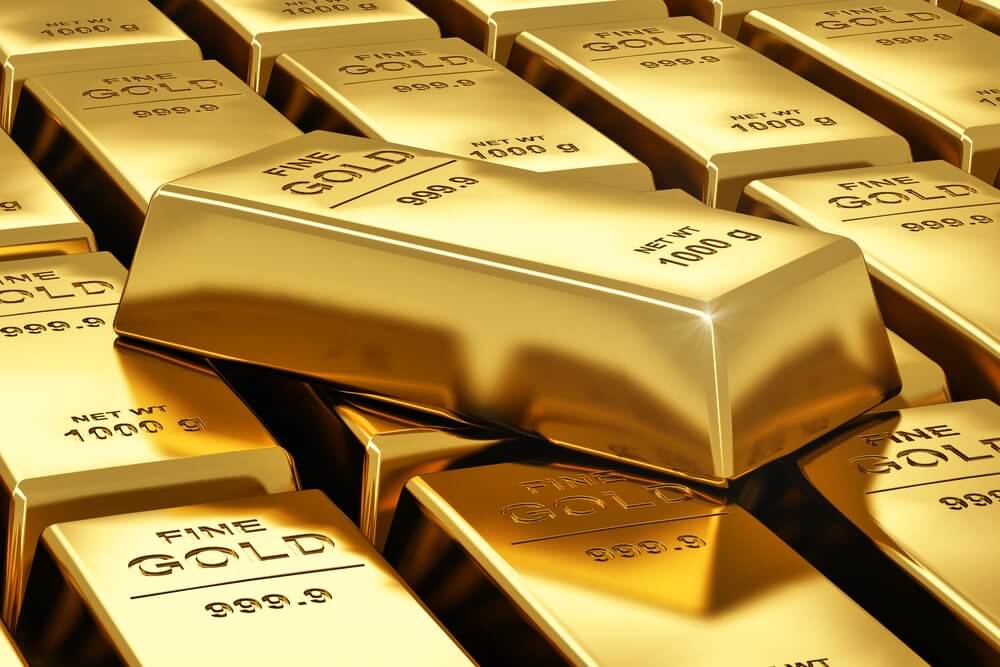
You said that it does not matter too much whether one buys coins or bars of gold.

Looking at today’s price quoted by goldbullion.com.au

1AUD = 0.889437USD
1USD = 1.12431AUD

GOLD 1 oz ingot/biscuit =AUD$1292
GOLD 1 oz coin = AUD$1342
GOLD BUY BACK per oz =AUD$1230

So bars are cheaper to buy and presumably the price obtained when liquidating back to them is the same for bars or coins, so one would lose more with coins?

For bars the differential is 4.8% lost between purchase and sales price.
Probably not too much considering there is no risk of being stitched up as in the case of paper gold…

52 cb February 16, 2010 at 1:52 pm

Sandra – Yes, you are spot on. For whatever reason, buying coins tends to be more expensive than bars, and that is the main reason why, overall, I prefer buying bars, rather than coins. My favourites are the 10 oz gold bars, and in silver the 100 oz siver bars.

Having said that, for anyone travelling to the US, I would highly recommend buying their coins for “small change.” And especially the silver and gold eagles, as they are legal tender, bearing face valus in USD. The silver eagle is a $1 coin, and the gold one is a $50 coin, but of course it would be silly to spend them as legal tender, as they both are worth multiple times more than their face value.

One little detail for anyone taking them out of the US and bringing them back to Australia is this: While the eagles tend to have a little higher premium on them than the “rounds”, which are not legal tender coins, there is an advantage in getting your silver and gold coins in legal tender formats, and namely the lack of border controls on their export and import. If you buy bars or rounds, these will be subject to export and import regulations by customs, whereas the same regulations will not apply to the eagles, since they count as currency, rather than a commodity, due to them having the status of legal tender.

Thus, you can bring in 20 or 50 kg of silver eagles and you will pay no duties, whereas you would be hit with massive taxes if you brought the same amount of silver in the form of bars. Or at least this is how things worked a few years ago – but currency controls are always on the cards, so this opportunity may not be open forever.

53 etch February 16, 2010 at 5:56 pm

Why You Shouldn’t Buy Telstra Shares – Ever!?????????????

cos it would be like sticking both hands in a bucket of gooo

OOOOHHHHHHHHH

54 Ex-customer February 25, 2010 at 2:05 pm

Forget the fact that the company is listed, it is a business that needs to make money. Having almost removed 100% of my private business to other telcos 7 years ago and in being in the process of moving our business contracts to other providers because of expense products and shocking service, its not hard to see why their share price is falling. They are a poorly run business with the apparent attitude that success is their right, its owed to them.

55 hi there April 29, 2011 at 7:56 pm

Firstly, i wouldnt say never ever. The problem with telstra is like that of many large corporations, it needs better management but a corollary to that is that it is susceptible to bad practices and even corruption.

When was the last time telstra was inovative? You could say 3G , and yes 3G is quite a success story. What you say is correct the gov hold over telstra will never allow it to innovate hence it will never bring in new markets. Second, the old telecom is still alive in telstra, it can never really function as a private enterprise.

the key to a successful telstra lies in the genius of management in being able to innovate but also deal with its inherited issues. It has great advantage over its competitors but it has not been able to use its capacity in making its business better.

At the end of the day remeber that telstra still owns 95%+ of all telecoms infrastructure and it still has monopolistic control over the nations infrastructure. It just requires the right variables to fall in place for it to very quickly turn around and be massively profitable, particularly when info tech is the way of the future.

Companies can take a long time to turn around eg. Apple

Leave a Comment

Previous post:

Next post: